Key takeaway
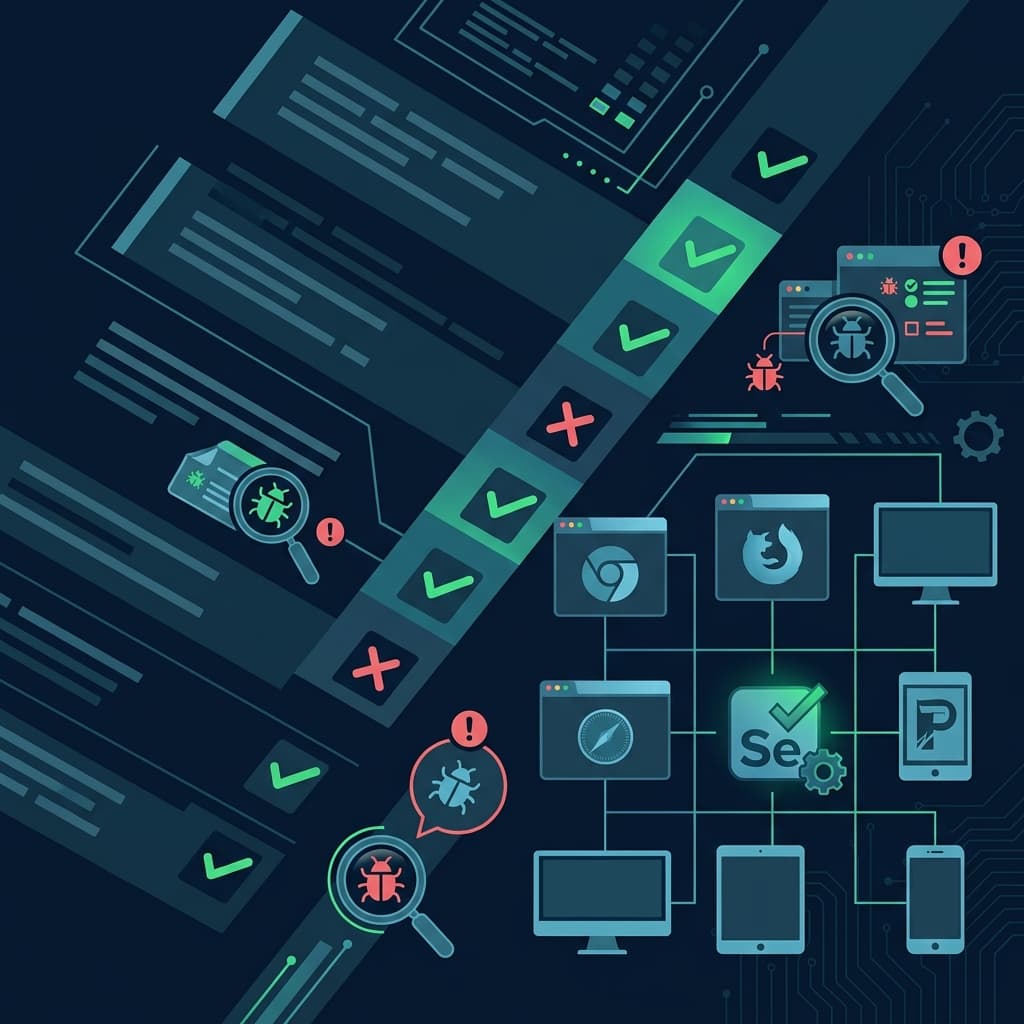
Combine analytical test case design (boundary value analysis) with coding automated scripts using Selenium/Playwright and API tests via Postman/RestAssured.
Common mistakes to avoid
- Assuming QA is only manual testing and avoiding programming practice or test code basics.
- Writing brittle, fragile UI selectors like raw dynamic class XPaths that break on layout changes.
- Running automation suites manually instead of integrating them into automated CI/CD pipeline triggers.
Step-by-step preparation
Learn fundamental test case styling, boundary limit values, and equivalence divisions.
Master API manual testing in Postman followed by writing automated verification scripts.
Learn UI automation frameworks like Playwright or Selenium and build clean Page Object Models.
Your checklist
Manual Testing Foundations (The Mindset of a Tester)
Before writing test code, you must learn how to design test cases. Software testing relies on structured methodologies to ensure maximum coverage with minimum resources. Learn techniques like Boundary Value Analysis (testing limits like 0, maximum, and invalid limits) and Equivalence Partitioning (grouping inputs into valid and invalid classes). Writing clear, reproducible bug reports with steps, expected results, actual outcomes, and environment details is a crucial skill.
You must also understand the Software Testing Life Cycle (STLC) and how it fits into the broader development lifecycle. Learn to perform exploratory testing, which involves investigating the application dynamically without pre-planned scripts to find unexpected edge cases. Understanding test execution metrics, bug severity versus priority, and regression testing schedules ensures you contribute value immediately.
- Write high-coverage test cases for a login/payment workflow
- Document a bug report using steps, screenshots, and logs
- Explain the difference between severity and priority with examples
API Testing & Automation
Most modern applications rely on APIs, and testing backend systems is often faster and more reliable than testing user interfaces. Learn how to verify REST APIs using tools like Postman. You should know how to configure different HTTP request methods (GET, POST, PUT, DELETE), pass query parameters, configure authorization tokens (like Bearer tokens or API keys), and inspect response payloads.
Once you master manual API tests, learn to automate them. Postman allows you to write test scripts in JavaScript to check status codes, JSON keys, and data types automatically. As you advance, learn to build API automation suites using programming languages, such as Java with RestAssured or Python with the requests library, running assertions on database states to verify that write operations succeed.
- Perform API requests using Postman with dynamic environments
- Write post-response validation scripts in JavaScript inside Postman
- Verify REST response schemas, status codes, and headers automatically
Web Automation & Locator Strategies
Automating browser actions is a core responsibility for SDETs. Learn to write automation scripts using frameworks like Selenium WebDriver, Playwright, or Cypress. The quality of your tests depends heavily on your locator strategies. Avoid brittle XPath or CSS selectors that break whenever a developer changes layout classes. Instead, use robust selectors like data attributes, text selectors, or accessible role locators.
Understand the Page Object Model (POM) design pattern, which separates test scripts from component element locators. This keeps code clean and ensures that UI changes only require updates in one file. Learn to handle asynchronous wait conditions (implicit, explicit, and fluent waits) so your automation tests do not fail randomly when network requests take slightly longer.
- Build a web automation script using Selenium, Cypress, or Playwright
- Implement the Page Object Model pattern in your automation project
- Handle dynamic page loads and slow ajax requests using explicit waits
SDET Programming & Test Frameworks
An SDET is a developer who writes software to test software. You must master at least one programming language (such as Java, Python, or JavaScript) and understand core object-oriented programming concepts. Learn to structure your test code cleanly, using design patterns like factory or builder to manage test data and configure drivers.
Learn to use test execution frameworks like TestNG or JUnit (for Java) or PyTest (for Python) to manage test configurations. These frameworks provide annotations to set up preconditions (like opening a database connection before tests run), run tests in parallel to save time, group tests by scope (smoke, sanity, regression), and generate detailed HTML test execution reports.
- Write structured test scripts using Java (JUnit/TestNG) or Python (PyTest)
- Set up setup/teardown hooks to clean test environments
- Configure parallel test runs to decrease execution durations
CI/CD Pipeline & DevOps Collaboration
Test automation is most effective when it runs automatically on code updates. Learn to integrate your test suites with CI/CD tools like Jenkins, GitHub Actions, or GitLab CI. Write pipeline configuration files that pull code, build application containers, execute test suites, and upload execution reports automatically.
Understanding how containerization works is highly useful. Learn to run your tests inside Docker containers to ensure consistent environments across local machines and cloud build runners. This helps eliminate the common issue of tests passing locally but failing on remote servers, making your quality gates reliable and respected by development teams.
- Write a GitHub Actions workflow that executes automated test runs on git pushes
- Build a Docker image to host and execute test automation scripts
- Integrate automated test execution reports with slack or email webhooks
What to take away
- QA requires a balance of analytical test design and robust programming.
- API testing is faster, more stable, and highly valued in modern backend systems.
- Automation scripts must use clean code patterns and robust selector models to avoid brittleness.
Frequently asked questions
Can a fresher start directly as an automation engineer?
Yes, if you demonstrate strong programming fundamentals and build projects showing web and API test automation scripts.
What is the difference between QA and SDET?
QA focuses on testing methodologies and validation, while SDET (Software Development Engineer in Test) focuses heavily on writing test code and infrastructure.
Sumit
Founder, CampusToCareerCampusToCareer is an independent career research platform helping freshers and early-talent candidates find verified jobs, ace interviews, and build placement-ready profiles. This guide was reviewed by the CampusToCareer editorial team before publication.